
Funds raised by banks through certificates of deposit in December clocked the highest in the financial year 2023-24 as liquidity remained tight in the system with the Reserve Bank of India (RBI) infusing Rs 2.01 trillion on Monday, the highest in the current financial year. The liquidity deficit in the banking system widened to more than Rs 2 trillion on Monday on the back of advance tax outflows, market participants said. Around Rs 4 trillion worth of outflows are expected because of advanced tax and goods and services tax (GST) payments in December.

Foreign investors have injected close to Rs 33,700 crore in domestic equities in this month so far primarily due to interest rate cut in the US and resilience of the Indian market. This also marks the second highest inflow in a month in this year so far, the last one being in March, when Foreign Portfolio Investors (FPIs) infused Rs 35,100 crore, data with the depositories showed. Going ahead, the trend of FPIs buying is likely to continue in the coming days, V K Vijayakumar, Chief Investment Strategist, Geojit Financial Services, said.

India's manufacturing sector growth eased slightly in July, on softer increases in new orders and output, while cost pressures and demand strength led to the steepest increase in selling prices since October 2013, a monthly survey said on Thursday. The seasonally adjusted HSBC India Manufacturing Purchasing Managers' Index (PMI) moderated slightly from 58.3 in June to 58.1 in July.

Reserve Bank of India Governor Bimal Jalan said on Friday that there was no proposal to lower the short-term benchmark repo rate now.
Bond market expects the Reserve Bank of India to cut the repo rate after the government buys back gilt worth over Rs 84,000 crore (Rs 840 billion), hopefully this month.

Among the 30 Sensex firms, Asian Paints, Infosys, JSW Steel, UltraTech Cement, Power Grid, Larsen & Toubro, HCL Technologies and Tata Steel were the biggest laggards. Tata Motors, HDFC Bank, Bharti Airtel, ITC, IndusInd Bank and Axis Bank were the gainers.

It is to be seen if SBI under Setty, who will have a three-year term, can ride the economic cycle to take SBI to new heights, navigating some of these challenges.

Wholesale inflation fell to a 4-month low of 1.31 per cent in August due to a decline in prices of vegetables and fuel, even though onion and potato prices spiked, according to official data released on Tuesday. Wholesale price index-based inflation fell for the second straight month in August after it hit a high of 3.43 per cent in May. Inflation in July was 2.04 per cent. In August last year, WPI inflation was (-) 0.46 per cent.
As far as the Indian households are concerned, although the leverage ratio in this basket has multiplied nearly 3 times in the past decade, it is still well below not just developed but also most other developing economies.
The Reserve Bank of India on Saturday decided to reduce the one-day and 14-day repo rate under the liquidity adjustment facility by 0.5 per cent to 4.5 per cent with effect from Monday.
Reserve Bank of India governor Bimal Jalan reiterated Monday the bank's soft monetary bias but said there was no immediate plan to cut the short-term repo rate.

India's central bank kept its key repo lending rate unchanged at 6.75 percent on Tuesday.

CRR remains unchanged at 4%; first repo rate cut since May 2013.

Banking shares are down up to 11% after the Reserve Bank of India has increased the policy repo rate by 25 basis points from 7.25% to 7.5% with immediate effect.

The Reserve Bank of India on Wednesday decided to keep the policy rate unchanged for the tenth time in a row but changed its stance to 'neutral' that may lead to a cut in the forthcoming policies. RBI maintained status quo despite the US Federal Reserve lowering the benchmark rates by 50 basis points last month.

The Reserve Bank of India's (RBI's) state of the economy report observed that any durable alignment of headline retail inflation with the target of 4 per cent could recommence in the second half of FY25 and sustain until numbers closer to the target are seen during the course of FY26, dashing hopes of any reduction in the policy repo rate in the current financial year. The report, authored by RBI staffers, including Deputy Governor in charge of monetary policy Michael Patra, said though headline numbers may fall in July and August due to base effect, it is likely to reverse in September.
The central bank has also left the Bank Rate and the Cash Reserve Ratio unchanged at 6 per cent and 5 per cent, respectively, in the annual policy announcement 2007 released on Tuesday.

'You will see him frequently asking customers -- especially retail -- about service experience, pain points, areas of improvement and suggestions.'
The Reserve Bank has kept the key policy rates unchanged, while the Cash reserve Ratio (CRR) has been cut by 25 bps to 4.25%.
The primary focus of monetary policy remains the containment of inflation and anchoring of inflation expectations.

The Reserve Bank of India's (RBI's) job to bring down inflation is not over, and any premature move on the policy front could undermine the success achieved so far on the price situation, according to RBI Governor Shaktikanta Das. RBI's rate setting panel, Monetary Policy Committee (MPC), had met for three days from February 6-8. The panel decided to leave the key policy rate unchanged at 6.5 per cent for the sixth time in row.

High frequency indicators suggest that a growth recovery is underway, but very tentatively and with weak legs, says Saugata Bhattacharya.
This is the fifth straight cut in rates by the Reserve Bank of India in as much policy reviews in 2019, and takes the total quantum of reductions to 1.35 per cent.

'Some buyers believe prices may correct in the future.' 'This is unlikely. Many developers are increasing prices amid strong sales and inflationary trends.'

Banks and realty among the most hit on account of high borrowing costs.
Wholesale inflation fell to a 3-month low of 2.04 per cent in July on decline in prices of food items especially vegetables, government data released on Wednesday showed. The decline in wholesale price index (WPI) based inflation in July came after it rose for four months in a row till June, when it was 3.36 per cent. It was (-) 1.23 per cent in July last year. In April wholesale inflation stood at 1.19 per cent.
Reserve Bank of India chief Bimal Jalan reiterated on Monday the bank's soft monetary bias but said there was no immediate plan to cut the short-term repo rate.

The Reserve Bank of India on Thursday opted for a pause second time in a row, maintaining key benchmark policy rate at 6.5 per cent as inflation moderates. The rate increase cycle was paused in April after six consecutive rate hikes aggregating to 250 basis points since May 2022. Announcing the bi-monthly monetary policy, RBI Governor Shaktikanta Das said the Monetary Policy Committee (MPC) unanimously decided to keep the rate unchanged at 6.5 per cent.

The muted CPI inflation print at 5% earlier this week, followed by a similar WPI number released Wednesday, seems to have spurred India's central bank into action, is how the economists are reading into Reserve Bank of India governor Raghuram Rajan's 25 basis point cut in repo rate.
Since November 3, the day the central bank's special window was opened, bids worth Rs 2,775 crore (Rs 27.75 billion) were placed at the auctions against the total outstanding amount of Rs 60,000 crore (Rs 600 billion) at the fixed rate of 7.5 per cent. "It's a commercial decision of banks to lend money to NBFCs. It implies that banks are still cautious about lending to NBFCs and they might take some more time to start lending normally to us," said an NBFC chief.

The RBI is fully aware that the high-cost loans and high indebtedness of the borrowers could pose financial stability risks, if not addressed by these NBFCs. Governor Shaktikanta Das has issued a stern warning, saying the RBI is closely monitoring these areas and will not hesitate to take appropriate action, if necessary, if the culprits don't opt for self-correction. Watch out for some action, soon, notes Tamal Bandyopadhyay.
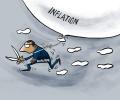
'If all goes well, we may well hit or even surpass the forecast growth rate.'

The need for money among banks, especially for short-term funds, may turn more intense in the last month of the financial year to feed the demand for capital for tax payments and meet year-end targets. The mobilisation of funds via the certificate of deposits (CDs) has seen a threefold increase to over Rs 60,000 crore in the fortnight that ended February 23 from around Rs 20,000 crore in the fortnight of January 26, 2024, according to the Reserve Bank of India (RBI) data.

Madhabi Puri Buch, the first female chairperson of Sebi, doesn't plan to rest on her laurels in her third and final year in office and has set out an ambitious goal, such as moving towards a same-day and instantaneous settlement cycle for the secondary market.

The Reserve Bank of India (RBI) is likely to take a "more dovish" stance in its upcoming monetary policy review on December 2 and may go in for a cut repo rate in February, according to a British brokerage house report.

The Reserve Bank of India (RBI) conducted two overnight variable rate reverse repo (VRRR) auctions on Tuesday, marking the first instance of such action in a single day. The move aimed to reduce liquidity from the banking system, which has been largely in deficit mode for the past four months. Market participants noted that the central bank held the second VRRR auction due to its awareness of funds being released to banks during the day.
Home loan consumers shouldn't rejoice yet expecting a cut in their home loan rates, feels Harsh Roongta, CEO, Apnapaisa.com, a day after the banking regulator Reserve Bank of India cut the repo rate by 0.5 per cent.

Deputy Governor Michael Patra warned about the spillover effects of food inflation.
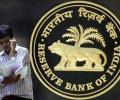
With concern on food inflation ebbing with the monsoon progressing well, the Reserve Bank of India (RBI) is warming up to the idea of a change in stance to "neutral" from "withdrawal of accommodation", according to economists. In his speech on Thursday during the annual event of the Federation of Indian Chambers of Commerce and Industry-Indian Banks' Association, RBI Governor Shaktikanta Das said: "The balance between inflation and growth is well-poised."
The reverse repo ceiling was imposed in March when liquidity in the banking system was tight and the overnight call rate had touched a peak of 80 per cent.
